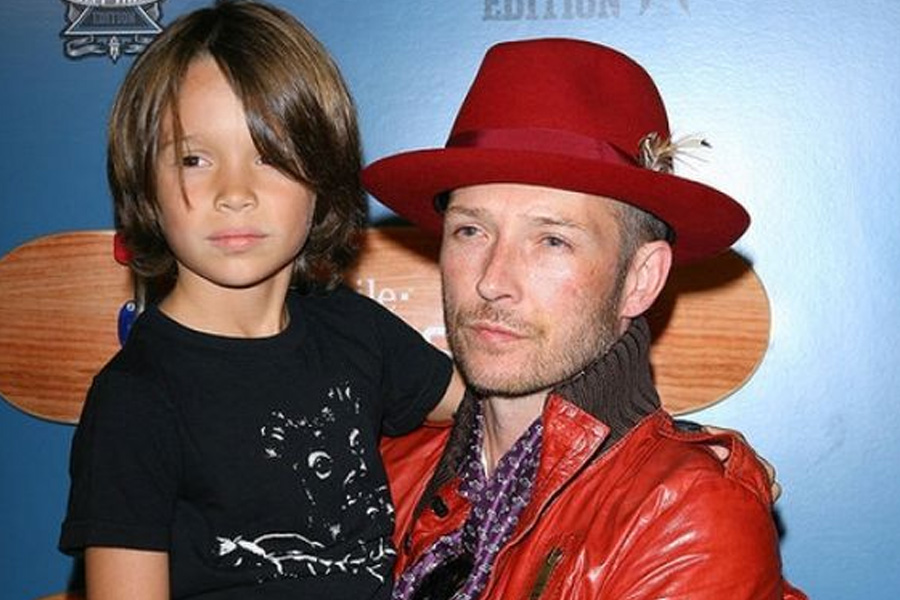
Basic Information
| Field | Details |
|---|---|
| Full name | Noah Mercer Weiland |
| Date of birth | November 19, 2000 |
| Parents | Scott Weiland (father), Mary Forsberg (mother) |
| Sibling(s) | Lucy (younger sister; born early 2000s) |
| Primary occupation | Musician, singer-songwriter |
| Public aliases | Noah Weiland |
| Notable associations | Tributes to Stone Temple Pilots material; independent singles and videos; occasional collaborative projects |
I want to start with a scene — picture a dim backstage hallway, fluorescent lights buzzing, a faded tour poster curling at the edges. That kind of half-remembered rock-movie glow is the atmosphere that has followed Noah Mercer Weiland since the day he was born: November 19, 2000, into a life framed by stadium soundchecks and tabloid flashbulbs. Being the child of a household name — Scott Weiland, the frontman of Stone Temple Pilots and Velvet Revolver — is not a footnote, it’s the opening chord of a song everyone already knows. But Noah’s song? It’s slowly composing itself, measure by careful measure.
Roots and family — names, dates, and the quiet center
Family is the central motif of Noah’s public story. Two clear facts anchor the narrative:
- Parentage: Scott Weiland (father) and Mary Forsberg (mother). They were married around 2000 and are publicly recognized as Noah’s parents.
- Sibling: Lucy, born in the early 2000s, who is frequently mentioned as Noah’s younger sister.
These facts form the constellation around which much of the public interest orbits: fans, journalists, and curious listeners connecting the dots between a famous father and his children’s choices. In the small, domestic details — a letter from a mother on behalf of her kids, the occasional family photo shared in softer features of profiles — Noah and Lucy are presented not as tabloid accessories, but as children trying to make sense of a complex inheritance: music, memory, and public scrutiny.
Career snapshot — releases, covers, and a growing discography
If we map Noah’s musical life in numbers and dates, it looks like a young artist building his own catalogue rather than riding his father’s wave:
- Born: 2000 — a generational marker (Gen Z) that colors his influences and platform choices.
- Public releases: Several singles and music videos released under the name Noah Weiland. These are independent offerings — short runs, DIY energy, and a clear interest in alternative and pop-inflected songwriting.
- Tributes & covers: He has performed material associated with his father’s legacy, offering homage rather than imitation.
A small table helps make the point:
| Year | Activity |
|---|---|
| 2000 | Birth |
| 2010s–2020s | Growing into music; public emergence as a recording artist |
| 2020s | Solo singles, music videos, occasional collaborations and live appearances |
The career arc is the kind of thing that reads like an indie film: low-budget authenticity, earnest rehearsal-room moments, and the occasional flash of bright production. Noah’s trajectory is not about instant superstardom; it’s about steady craft and choosing what pieces of a famous legacy to carry forward.
Personal life — what’s public and what’s private
Publicly, Noah’s life is framed through three lenses: family history, creative work, and personal growth. He’s made public-facing music, he’s appeared in interviews and pieces that touch on the complexities of growing up in the shadow of a well-known parent, and he has — by his own accounts in profiles — navigated personal challenges while pursuing music.
Numbers again: Noah is in his early-to-mid 20s, a demographic where reinvention is still considered an artist’s best friend. He uses contemporary platforms (social media, video hosting) to release work and connect with audiences, a common playbook for musicians of his generation.
Financial notes — the absence of a public number
Here’s an important, factual line: there’s no verified public estimate of Noah Mercer Weiland’s personal net worth. He’s an emerging artist and not a public billionaire; discussions in the press about estate details historically relate to his father’s finances, not Noah’s personal fortune. In plain terms: creative outputs, not bank totals, define his public profile.
The public narrative — press, profiles, and the rumor mill
When a name is tethered to rock ‘n’ roll history, headlines come fast. For Noah, mainstream coverage tends to follow a pattern: music releases and tributes, family statements in the wake of parental events, and human-interest profiles that explore legacy and identity. The less reliable content — rumor threads and gossip — spins off in parallel, as it always does, but the enduring, verifiable narrative is simpler: a young musician learning to sing his own songs.
FAQ
Who are Noah Mercer Weiland’s parents?
Noah’s parents are Scott Weiland and Mary Forsberg.
When was Noah Mercer Weiland born?
He was born on November 19, 2000.
Does Noah have siblings?
Yes — he has a younger sister named Lucy.
What does Noah do for a living?
He is a musician and singer-songwriter who releases independent singles and music videos.
Is Noah Weiland wealthy?
There is no publicly verified estimate of Noah’s personal net worth.
Has Noah released music related to his father’s band?
Yes — he has performed tributes and covers connected to his father’s material while also releasing his own original songs.
Where can I hear Noah’s music?
Noah releases music and videos on public platforms like video hosting sites and social media channels.
Is Noah involved in any controversies?
Public coverage focuses on his music and family history; rumors exist in fan spaces, but mainstream reporting centers on his artistic output.
How Efficient Site Preparation Sets Projects Up For Success
The Best Services To Consider For A Stress Free Home Renovation
Steps You Can Take To Improve Your Smile
Services Every Homeowner Should Prioritize During A Renovation
Modernizing Television Networks From Hdmi And Qam Sources To Iptv Multicast And Ip Based Catv


